
The Wonders of Black Soldier Flies: An Introductory Guide
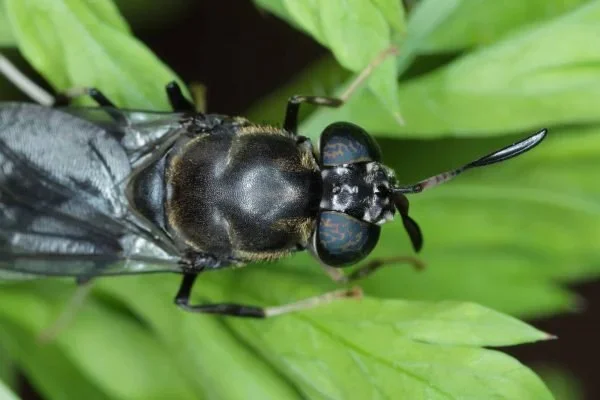
Discover Nature's Most Remarkable Recycling Insect
New to Black Soldier Flies (BSF)? Learn what they are, how they grow, why they're important for sustainable agriculture, and how commercial Black Soldier Fly farming transforms organic waste into valuable insect protein and organic fertilizer.
What Are Black Soldier Flies?
Black Soldier Flies (Hermetia illucens) are beneficial insects best known for their remarkable ability to recycle organic materials into valuable resources. Although they resemble other flies, they differ significantly in both behavior and ecological function.
Unlike common houseflies, Black Soldier Flies are not considered pests. Adult flies do not bite, sting, or spread disease, and they have little interest in human food or living spaces. Instead, their larvae efficiently convert suitable organic materials into insect biomass that can be used in agriculture, animal nutrition, and sustainable waste management.
Today, commercial Black Soldier Fly farming is expanding worldwide as organizations seek practical solutions for organic waste recycling, insect protein production, and circular economy initiatives.
Why Are Black Soldier Flies Important?
Black Soldier Flies provide environmental and agricultural benefits that extend far beyond their fascinating biology.
Black Soldier Fly larvae rapidly consume suitable organic materials, reducing waste volume while recovering valuable nutrients. This natural process supports more sustainable waste management systems and helps divert organic materials from landfill.
The larvae are rich in protein and beneficial nutrients, making them an increasingly important ingredient for poultry, aquaculture, pet food, and other livestock feeding applications.
Organic Fertilizer Production
After the larvae complete their feeding stage, the remaining material can be processed into valuable organic fertilizer that supports soil health and plant growth.
Together, these benefits make BSF an important contributor to circular agriculture.
Understanding the Black Soldier Fly Life Cycle
Like all flies, Black Soldier Flies undergo complete metamorphosis consisting of four distinct stages.
Egg
Female Black Soldier Flies typically lay hundreds of eggs near suitable organic materials where newly hatched larvae will have immediate access to food.
Larva
The larval stage is the most important for commercial production. During this period, larvae consume large quantities of organic material and rapidly convert it into valuable insect biomass.
Prepupa
As larvae mature, they darken in color and naturally migrate away from the feeding substrate in search of a suitable place to pupate.
Adult
Adult Black Soldier Flies emerge from the pupal stage with one primary objective: reproduction. Their lifespan is relatively short, and they consume little or no food before laying the next generation of eggs.
What Do Black Soldier Fly Larvae Eat?
One of the characteristics that makes BSF so valuable is their ability to consume a wide variety of suitable organic materials.
Depending on local regulations and production systems, larvae may be raised on approved organic feedstocks such as:
fruit and vegetable waste
food processing by-products
brewery residues
agricultural by-products
other suitable organic materials
Their efficient feeding behavior makes them an effective biological solution for recovering nutrients from organic waste streams.
Are Black Soldier Flies Safe?
Yes.
Black Soldier Flies are widely recognized as harmless insects.
Adult BSF:
do not bite
do not sting
do not infest homes
are not aggressive
rarely interact with humans
These characteristics make them one of the safest insect species used in commercial agriculture.
If you'd like to learn more about Black Soldier Fly safety, explore our complete guide.
How Are Black Soldier Flies Used?
Commercial Black Soldier Fly farming supports a growing number of industries.
Applications include:
BSF larvae are processed into sustainable insect protein for poultry, aquaculture, swine, and pet nutrition.
Larvae help convert suitable organic materials into valuable agricultural products while reducing waste.
Organic Fertilizer
The remaining residue can support healthier soils and more sustainable crop production.
Scientific Research
Researchers continue to study Black Soldier Flies for applications in sustainable agriculture, nutrient recovery, and circular economy systems.
Can You Farm Black Soldier Flies?
Yes.
Black Soldier Fly farming ranges from small educational projects to fully automated commercial facilities capable of processing significant quantities of organic materials.
At SoldierFly Technologies, commercial systems combine:
Entoware digital traceability
This modular approach allows organizations to scale production according to operational requirements and market demand.
Frequently Asked Questions
What is a Black Soldier Fly?
A beneficial insect that naturally converts suitable organic materials into valuable insect biomass.
Are Black Soldier Flies dangerous?
No. They do not bite, sting, or spread disease.
Why are Black Soldier Flies important?
They support sustainable agriculture through organic waste recycling, insect protein production, and nutrient recovery.
Can I farm Black Soldier Flies?
Yes. Both hobbyists and commercial producers can raise Black Soldier Flies using systems appropriate for their scale and objectives.
What industries use Black Soldier Flies?
Agriculture, aquaculture, poultry, pet food, waste management, fertilizer production, and scientific research all benefit from BSF technology.
Conclusion
Black Soldier Flies are much more than ordinary insects. Their ability to recycle organic materials, produce sustainable insect protein, and support circular agricultural systems has positioned them as one of the most important species in modern sustainable farming.
Whether you're discovering BSF for the first time or exploring commercial production opportunities, understanding their biology and practical applications is the first step toward appreciating their growing role in the future of agriculture.
Ready to Learn More?
Interested in commercial Black Soldier Fly farming?
Explore our commercial Black Soldier Fly farming systems, discover the Soldier Fly Technologies Academy, or contact our team to learn how BSF technology can support your sustainability goals.
About the Author
David Fluker is the CEO of Soldier Fly Technologies and a second-generation insect farmer with roots in Fluker Farms (est. 1956). With more than a decade of hands-on experience in Black Soldier Fly bioconversion, David leads the development and licensing of scalable BSF farming systems that transform organic waste into sustainable insect protein and organic fertilizer. His work focuses on practical engineering solutions, modular automation, and commercial production systems that help organizations deploy profitable and sustainable Black Soldier Fly operations worldwide.
Learn more about the Soldier Fly Technologies team.
Related Articles
What Do Black Soldier Flies Do?
Are Soldier Flies a Threat to Humans?
Do BSF Bite or Sting?
Black Soldier Flies: A Superfood for Chickens
BSF Farming: From Manual to Full Automation with BOOTS
10 Cool Facts About the Black Soldier Fly