Soldier Fly: The Unsung Heroes Revolutionizing Composting
Turning Organic Waste into Valuable Resources
Discover how Black Soldier Fly (BSF) larvae are transforming composting by converting organic waste into sustainable insect protein, nutrient-rich fertilizer, and valuable agricultural resources through efficient bioconversion.
How Black Soldier Flies Are Revolutionizing Composting
Organic waste is one of the world's fastest-growing environmental challenges. Food scraps, agricultural residues, food processing by-products, and other biodegradable materials often end up in landfills where they produce methane and contribute to greenhouse gas emissions.
Black Soldier Fly (Hermetia illucens) larvae provide an innovative alternative.
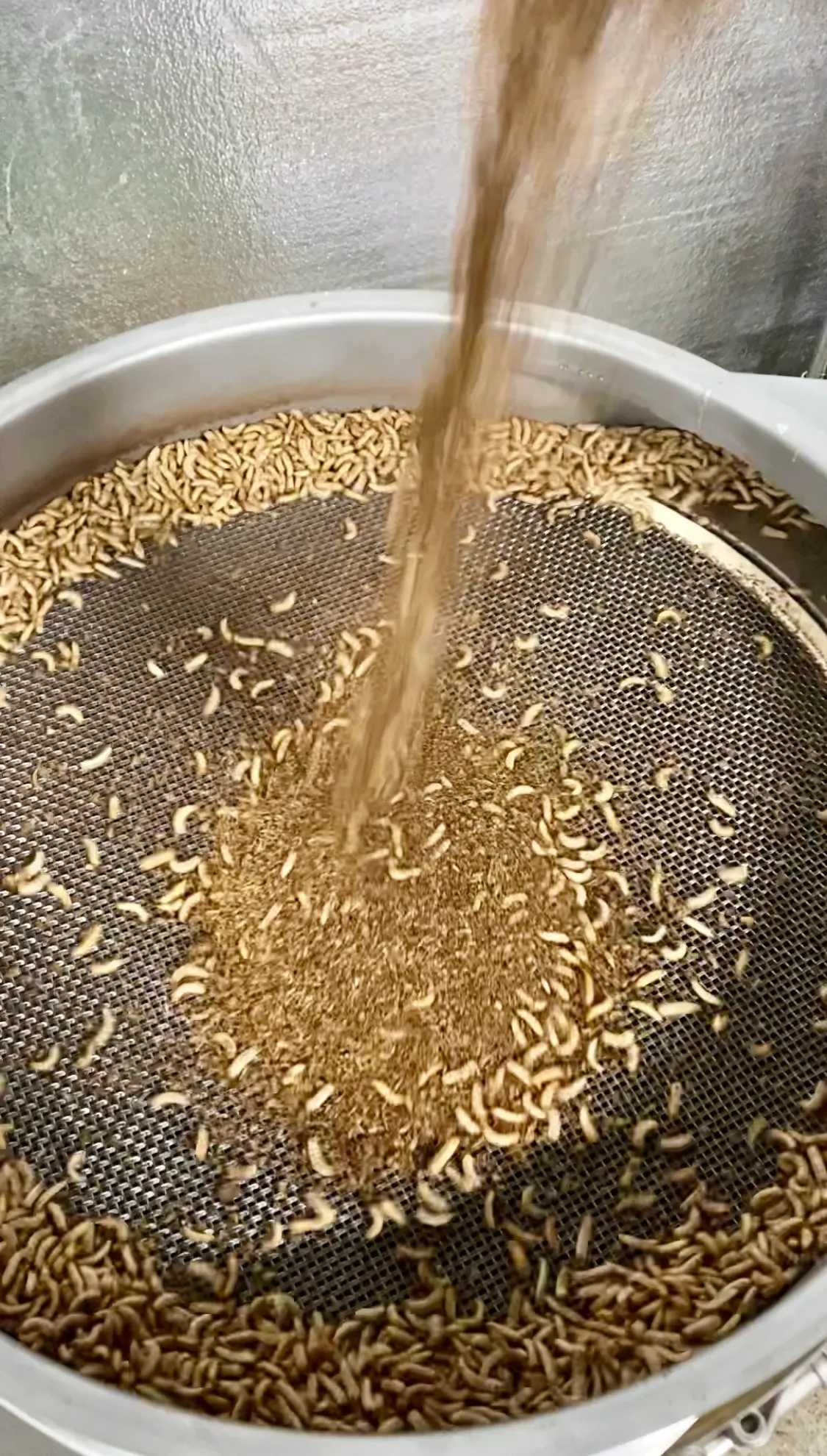
Rather than allowing organic waste to decompose slowly, BSF larvae rapidly convert suitable organic materials into valuable insect biomass and nutrient-rich organic fertilizer through a natural biological process known as bioconversion.
This remarkable ability has positioned Black Soldier Flies as one of the most promising biological solutions for sustainable waste management and the circular economy.
Why Black Soldier Fly Larvae Are Ideal for Composting
Black Soldier Fly larvae possess several characteristics that make them highly effective biological recyclers.
Rapid Organic Waste Conversion
During their larval stage, BSF consume large quantities of suitable organic materials while significantly reducing overall waste volume.
Their rapid growth enables efficient nutrient recovery that would otherwise be lost through conventional waste disposal.
Efficient Resource Recovery
Unlike traditional composting alone, Black Soldier Fly systems recover nutrients by producing valuable insect biomass alongside organic fertilizer.
This creates multiple useful outputs from materials that would otherwise become waste.
Space-Efficient Processing
Commercial BSF production systems require relatively little land while processing significant quantities of organic material, making them suitable for agricultural, commercial, and industrial applications.
More Than Composting: Supporting a Circular Economy
Black Soldier Fly farming extends well beyond conventional composting.
Properly managed production systems transform suitable organic materials into several valuable agricultural products.
Sustainable Insect Protein
Harvested larvae provide a highly nutritious source of insect protein used in poultry, aquaculture, livestock, and pet food applications.
Organic Fertilizer
After larvae complete their feeding cycle, the remaining residue—commonly known as frass—can be used as an organic soil amendment that supports soil health and nutrient cycling.
Nutrient Recovery
Instead of losing valuable nutrients in landfill, BSF systems recover those nutrients for productive agricultural use, supporting more sustainable food production systems.
Environmental Benefits of Black Soldier Fly Composting
Black Soldier Fly technology offers several environmental advantages.
Commercial BSF systems can help:
Reduce organic waste sent to landfill.
Recover nutrients from biodegradable materials.
Lower methane emissions associated with landfill disposal.
Produce sustainable insect protein.
Generate valuable organic fertilizer.
Support more resource-efficient agriculture.
These benefits have made Black Soldier Fly farming an increasingly important component of modern circular economy initiatives.
From Composting to Commercial Production
While backyard composting remains valuable, commercial Black Soldier Fly farming allows organizations to process organic materials at a much larger scale.
Modern production facilities integrate:
Modular BOOTS Automation
Entoware production management software
Professional operator training
Together, these technologies improve efficiency, traceability, and long-term scalability.
Why SoldierFly Technologies Uses Black Soldier Flies
At Soldier Fly Technologies, Black Soldier Fly farming is viewed as more than waste management.
It is a scalable biological production system that combines sustainable engineering with practical commercial agriculture.
Our integrated approach combines proven breeding systems, optimized larvae production, modular automation, and digital production management to help organizations transform suitable organic materials into valuable agricultural products.
By introducing technology only when operational growth justifies the investment, organizations can expand efficiently while maintaining lower capital expenditure and operational flexibility.
Frequently Asked Questions
Is Black Soldier Fly composting different from traditional composting?
Yes. While both recycle organic materials, Black Soldier Fly larvae rapidly convert suitable organic waste into insect protein and organic fertilizer through biological nutrient recovery.
What types of organic waste can Black Soldier Fly larvae process?
Depending on local regulations and production requirements, BSF larvae can consume a wide variety of suitable organic materials, including fruit and vegetable waste, food processing by-products, agricultural residues, and other biodegradable materials.
What products are produced?
Commercial Black Soldier Fly farming commonly produces:
Insect protein
Organic fertilizer (frass)
Valuable agricultural nutrients
Why is Black Soldier Fly farming considered sustainable?
It supports nutrient recovery, reduces landfill waste, improves resource efficiency, and contributes to circular agricultural systems.
Conclusion
Black Soldier Flies are transforming how the world views organic waste.
Rather than treating biodegradable materials as a disposal problem, Black Soldier Fly farming demonstrates how biological systems can recover nutrients, produce sustainable insect protein, and generate valuable organic fertilizer.
As demand continues to grow for circular economy solutions and sustainable agriculture, Black Soldier Fly technology offers organizations a practical pathway toward more efficient resource recovery and environmentally responsible production.
Ready to Learn More?
Discover how commercial Black Soldier Fly farming systems can help convert organic waste into valuable agricultural products.
Explore the Soldier Fly Technologies Academy to learn more about BSF production or contact our team to discuss your project.
About the Author
David Fluker is the CEO of Soldier Fly Technologies and a second-generation insect farmer with roots in Fluker Farms (est. 1956). With more than a decade of hands-on experience in Black Soldier Fly bioconversion, David leads the development and licensing of scalable BSF farming systems that transform organic waste into sustainable insect protein and organic fertilizer. His work focuses on practical engineering solutions, modular automation, and commercial production systems that help organizations deploy profitable and sustainable Black Soldier Fly operations worldwide.
Learn more about the Soldier Fly Technologies team.
Related Articles
Continue learning about Black Soldier Fly farming and sustainable waste management:
What Do Black Soldier Flies Do? (Understanding the biological role of BSF in waste conversion.)
The Wonders of Black Soldier Flies: An Introductory Guide (Learn the fundamentals of BSF biology, life cycle, and commercial applications.)
BSF Farming: From Manual to Full Automation with BOOTS (Discover how modular automation supports scalable BSF production.)
Simple – Not If, But When It Breaks (Why reliable off-the-shelf equipment improves commercial farming operations.)
10 Cool Facts About the Black Soldier Fly (Explore fascinating scientific facts and commercial uses of BSF.)