
10 Cool Facts About the Black Soldier Fly
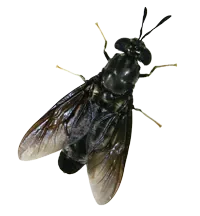
10 fascinating facts about the Black Soldier Fly from forensic science and genetics to sustainable farming, insect protein, and the future of organic waste conversion.
Discover ten fascinating facts about the Black Soldier Fly (Hermetia illucens). From helping forensic investigations to producing biodiesel and sustainable animal feed, learn why this remarkable insect is transforming agriculture, waste management, and the circular economy.
Beyond Waste Conversion: 10 Fascinating Facts About the Black Soldier Fly
The Black Soldier Fly (Hermetia illucens) has become one of the world's most important insects for sustainable agriculture and organic waste management. While many people recognize its ability to convert food waste into valuable insect protein and organic fertilizer, its remarkable biology extends far beyond commercial farming.
From forensic science and biotechnology to renewable energy and the circular economy, Black Soldier Flies continue to surprise researchers and industry professionals alike.
Whether you're discovering Black Soldier Flies for the first time or exploring commercial BSF farming opportunities, these ten fascinating facts reveal why this extraordinary insect is changing the future of sustainable food production.
New to Black Soldier Flies? Start with The Wonders of Black Soldier Flies: An Introductory Guide to learn about their lifecycle, biology, and commercial applications. (Internal link → Introductory Guide)
1. Black Soldier Flies Can Help Solve Crimes
One of the most surprising applications of the Black Soldier Fly is in forensic entomology.
Forensic scientists use insect life cycles to estimate the post-mortem interval during criminal investigations. While blowflies are usually the first insects to colonize remains, Black Soldier Flies often appear during later stages of decomposition, providing valuable information that helps investigators establish more accurate timelines.
This demonstrates how understanding insect biology contributes to disciplines well beyond agriculture.
2. Black Soldier Flies May Have Traveled the World with Christopher Columbus
Although Black Soldier Flies are now found throughout tropical and temperate regions worldwide, researchers believe they originated in the Americas.
Historical evidence suggests the species likely spread to Europe during the Columbian Exchange before gradually expanding into Africa, Asia, and Australia through international trade.
Today, Hermetia illucens is one of the most widely farmed beneficial insect species in the world.
3. Scientists Have Successfully Edited Black Soldier Fly Genes
Black Soldier Flies are now attracting significant interest in biotechnology.
Researchers have successfully applied CRISPR gene-editing technology to study genes responsible for insect development and physiology. This research may help improve breeding efficiency, nutritional characteristics, and our understanding of insect biology in the future.
The growing scientific interest in Black Soldier Flies demonstrates their importance beyond waste management and animal nutrition.
4. Black Soldier Fly Larvae Can Produce Biodiesel
Black Soldier Fly larvae naturally accumulate large amounts of fat during development.
Researchers have demonstrated that these lipids can be converted into biodiesel, creating another valuable product alongside insect protein and organic fertilizer.
Although most commercial BSF facilities currently prioritize feed production, biodiesel research highlights the versatility of Black Soldier Fly bioconversion.
Related Reading: Learn how advanced production technologies are improving commercial BSF operations in BSF Technology: Revolutionizing Organic Waste Conversion.
5. They Produce Natural Antimicrobial Compounds
Despite developing in microbe-rich environments, Black Soldier Fly larvae remain remarkably resilient.
Scientists have identified naturally occurring antimicrobial peptides (AMPs) within the larvae that help defend against harmful bacteria and pathogens.
Researchers continue investigating these compounds for potential applications in agriculture, animal health, and biotechnology.
6. Black Soldier Fly Larvae Can Thrive on Coffee Waste
Black Soldier Fly larvae are among nature's most efficient organic waste recyclers.
They can successfully process numerous organic waste streams, including:
Fruit and vegetable waste
Brewery by-products
Agricultural residues
Coffee pulp
Spent coffee grounds
Distillery co-products
Food manufacturing by-products
This exceptional feeding flexibility makes them an ideal solution for commercial organic waste management.
Related Reading: Discover how Soldier Fly Technologies applies BSF bioconversion in industrial applications through Revolutionizing Waste Management in the Distillery Industry.
7. Adult Black Soldier Flies Do Not Bite or Sting
Despite their intimidating appearance, adult Black Soldier Flies are completely harmless.
They:
Do not bite
Do not sting
Do not transmit diseases
Rarely enter homes
Are not considered pests
Adult flies possess reduced mouthparts and spend their short lifespan focused almost entirely on reproduction.
Learn More: Read Do BSF Bite or Sting?and Are Soldier Flies a Threat to Humans?to separate common myths from scientific facts.
8. Black Soldier Fly Larvae Produce Sustainable Animal Feed
One of the best-known commercial applications of Black Soldier Fly larvae is sustainable animal nutrition.
The larvae are naturally rich in:
High-quality protein
Beneficial fats
Lauric acid
Calcium
Essential amino acids
These nutritional properties make them an increasingly valuable ingredient for poultry, aquaculture, livestock, and pet nutrition while reducing dependence on traditional protein sources such as fishmeal and soybean meal.
Related Reading: Learn why poultry producers are adopting insect protein in Black Soldier Flies: A Superfood for Chickens.
9. Black Soldier Flies Support the Circular Economy
Black Soldier Fly farming represents one of the clearest examples of the circular economy in action.
Commercial BSF systems help organizations:
Divert organic waste from landfill
Recover valuable nutrients
Produce sustainable insect protein
Generate organic fertilizer
Reduce greenhouse gas emissions
Support regenerative agriculture
Rather than treating organic waste as a disposal problem, Black Soldier Fly farming transforms it into valuable resources.
Related Reading: Explore the complete waste conversion process in What Do Black Soldier Flies Do?
10. Commercial Black Soldier Fly Farming Continues to Evolve
Today's commercial BSF facilities are becoming increasingly sophisticated.
Modern operations combine:
Modular production systems
Computer vision
Automated larvae counting
Digital traceability
Barcode tracking
Entoware production software
BOOTS (Bolt-On Off-the-Shelf) Automation
Rather than automating everything from day one, SoldierFly Technologies promotes a modular approach that allows producers to introduce automation gradually as production and market demand grow.
Related Reading: Learn more in BSF Farming: From Manual to Full Automation with BOOTS.
Frequently Asked Questions
Are Black Soldier Flies dangerous?
No. Adult Black Soldier Flies do not bite, sting, or spread disease. They are considered beneficial insects and play an important role in organic waste recycling.
Why are Black Soldier Flies important?
Black Soldier Flies efficiently convert organic waste into insect protein, beneficial fats, and organic fertilizer while supporting sustainable agriculture and the circular economy.
What do Black Soldier Fly larvae eat?
They consume many types of organic waste, including food scraps, agricultural residues, coffee waste, brewery by-products, and distillery co-products.
Are Black Soldier Flies farmed commercially?
Yes. Commercial BSF farms operate worldwide to process organic waste while producing sustainable ingredients for animal feed, agriculture, and biotechnology.
Conclusion
The Black Soldier Fly is far more than an efficient waste recycler. From supporting forensic investigations and biotechnology research to advancing sustainable agriculture, renewable energy, and the circular economy, this remarkable insect continues to unlock new opportunities across science and industry.
As commercial Black Soldier Fly farming evolves through modular automation, digital traceability, and scalable production systems, its contribution to global food security and sustainable resource management will only continue to grow.
Whether your goal is reducing organic waste, producing sustainable animal feed, or launching a commercial BSF operation, SoldierFly Technologies provides the expertise, technology, and proven systems to help organizations succeed.
References
Barragan-Fonseca, K. B., Dicke, M., & van Loon, J. J. A. (2017). Nutritional value of the Black Soldier Fly (Hermetia illucens L.) and its suitability as animal feed.
Diener, S., Zurbrügg, C., & Tockner, K. (2009). Conversion of organic material by Black Soldier Fly larvae.
Gold, M., et al. (2020). Biowaste treatment with Black Soldier Fly larvae: Increasing performance through research.
Wang, Y., et al. (2021). CRISPR/Cas9-mediated genome editing in Hermetia illucens.
About the Author
David Fluker is the CEO of Soldier Fly Technologies and a second-generation insect farmer with roots in Fluker Farms (est. 1956). With decades of experience in commercial insect farming and Black Soldier Fly bioconversion, David leads the development of scalable BSF production systems that transform organic waste into sustainable insect protein, beneficial fats, and organic fertilizer. His work focuses on modular engineering, BOOTS (Bolt-On Off-the-Shelf) Automation, digital traceability through Entoware, and licensing proven Black Soldier Fly farming systems worldwide.
Learn more about the Soldier Fly Technologies Team
Related Articles
Explore more Black Soldier Fly resources:
The Wonders of Black Soldier Flies: An Introductory Guide
What Do Black Soldier Flies Do?
Do BSF Bite or Sting? (Internal link
Are Soldier Flies a Threat to Humans?
Black Soldier Flies: A Superfood for Chickens
BSF Farming: From Manual to Full Automation with BOOTS
BSF Technology: Revolutionizing Organic Waste Conversion
Revolutionizing Waste Management in the Distillery Industry